
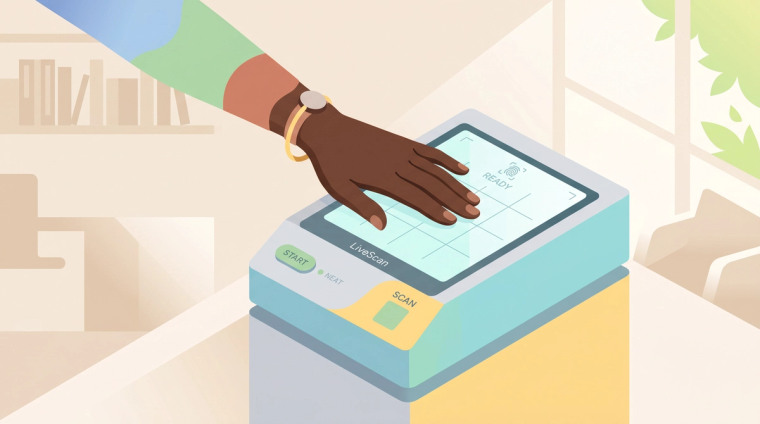
If you just filed Form I-130 and you're wondering whether a biometrics appointment is coming, the honest answer is: probably not for the petition itself. Most I-130 filers never get a dedicated biometrics notice. What trips people up is that the I-130 is often filed alongside Form I-485, and it's the I-485 that actually triggers the Application Support Center appointment most people associate with their green card case.
This guide sorts out when I-130 biometrics apply, when they don't, and what happens if you do get a notice. For the full overview of the petition itself, our complete guide to Form I-130 covers the process end to end.
Do you actually need biometrics for your I-130?
This is where most of the confusion lives, so let's be direct.
Standalone I-130 (consular processing). If you filed the I-130 on its own (meaning your relative is abroad and will go through an embassy interview later), neither you nor the beneficiary is typically required to attend a biometrics appointment in the U.S. as part of the I-130. The Form I-130 instructions use discretionary language: USCIS "may require" biometrics, not "will require." In practice, standalone I-130s do not generate an ASC notice for the petitioner.
Concurrent I-130 + I-485. If the beneficiary is in the United States and filed Form I-485 (Adjustment of Status) at the same time as the I-130, biometrics absolutely apply, but they're triggered by the I-485, not the I-130. The beneficiary will get an ASC appointment notice. Most people call this their "I-130 biometrics" because it feels like part of the same package, and that's fine, but it helps to know which form is actually doing the work. Our breakdown of the difference between I-130 and I-485 spells out how the two forms interact.
The Adam Walsh Act exception. If you are the petitioner and you have a qualifying criminal history (specifically certain sex offenses), USCIS will schedule you for biometrics under the Adam Walsh Child Protection and Safety Act. This is the main situation where an I-130 petitioner, not the beneficiary, gets an ASC notice.
USCIS retains broad discretion. Under 8 CFR § 103.2(b)(9), USCIS can require biometrics from any applicant, petitioner, sponsor, or beneficiary at any time. Rare, but possible.
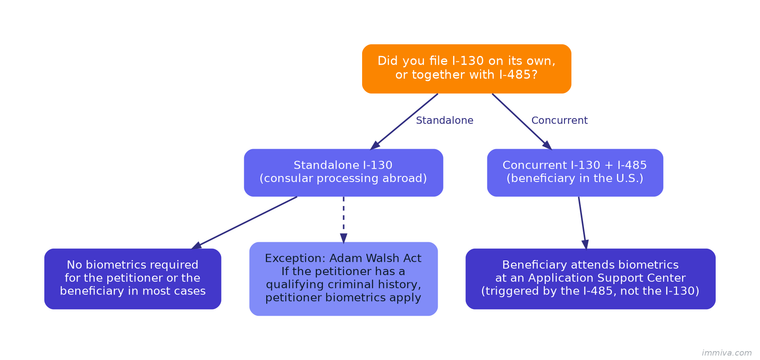
A simplified path for figuring out whether I-130 biometrics apply to your case. Standalone filings usually don't trigger a biometrics appointment, but concurrent I-130 + I-485 filings always do.
When your biometrics notice arrives
If a biometrics appointment is required, USCIS will send a Form I-797C appointment notice by mail and may also post it to your USCIS online account if you have one. Timing varies by case type, workload, and location.
If a biometrics appointment should have been scheduled but you have not received a notice, contact the USCIS Contact Center at 800-375-5283 or check your USCIS online account. Rescheduling and notice non-receipt are normally handled through the regular Contact Center channels. For a clearer picture of where biometrics fits in the larger I-130 timeline, our I-130 processing time guide walks through every stage.
What to bring to your I-130 biometrics appointment
Keep it simple. You only need three things:
- Your ASC Appointment Notice (Form I-797C). Bring every notice you received if you got more than one.
- Valid, unexpired government-issued photo ID. A U.S. passport, driver's license, permanent resident card, or EAD all work.
- A printed copy of your completed I-130 (or I-485, if concurrent). Not required, but a good idea.
Leave the following at home or in the car: weapons, cameras, recording devices, food, and open drinks. Cell phones are fine but should be silenced.
A few practical tips the notice won't tell you:
- Skip hand lotions, henna, and fresh artificial nails on appointment day. They interfere with the fingerprint scanner.
- Remove hats for the photo. Religious head coverings are fine as long as your face is visible.
- Bring an interpreter if you don't understand spoken English. A friend or family member is sufficient.
- You don't need your attorney at the ASC, but they're allowed: USCIS says you may bring someone for language help, including a family member, attorney, or accredited representative.
A thorough document walkthrough for the petition itself lives in our I-130 documents checklist.
What happens at the ASC, step by step
Plan for 15 to 30 minutes total. Arrive about 15 minutes before your scheduled time so you can clear security without rushing.
Here's the flow:
- Security screening. Same pattern as a courthouse: bags x-rayed, you walk through a metal detector.
- Check-in. A staff member scans your appointment notice and verifies your ID.
- Wait. Appointments usually run close to on time. Bring something to read.
- Fingerprinting. A digital LiveScan machine captures all ten fingers. No ink, nothing messy.
- Photograph. A standard head-and-shoulders digital photo.
- Signature and attestation. You sign digitally to affirm, under oath, that the information in your petition is true and complete. The attestation is displayed in English and Spanish.
- Notice stamped. You leave with a stamped copy of your appointment notice confirming attendance.
Biometrics is not an interview. No one will ask you questions about your case, your relationship, or your eligibility. Staff at most ASCs are contractors whose job is to collect fingerprints, photos, and signatures. USCIS does not collect blood, DNA, or perform any medical exam.
Rescheduling or missing your appointment
Rescheduling. USCIS says you should request a new date through your USCIS online account before the date and time of the original appointment and show good cause. If the appointment is less than 12 hours away, if you already missed it, or if you cannot use the online tool, contact the USCIS Contact Center at 800-375-5283 or Emma. USCIS does not accept biometrics rescheduling requests by mail or in person. The online tool cannot be used if the appointment has already been rescheduled 2 or more times. Our guide to rescheduling a USCIS biometrics appointment covers the process in more detail.
Missing the appointment. USCIS may treat the related application, petition, or request as abandoned if you miss biometrics without timely requesting rescheduling. If it happens, contact the USCIS Contact Center right away. Do not count on a walk-in: USCIS says it is not accepting walk-in visits and directs people to use scheduled appointments and formal rescheduling channels. Online rescheduling is not available after the appointment date has passed.
What happens after biometrics
Once your biometrics are captured, USCIS uses them to verify identity and run required background and security checks, including fingerprint-based checks with the FBI. USCIS does not provide a standard published current timeframe for how long those checks take, and you generally will not receive a separate notice when they are completed.
For concurrent I-130 + I-485 filers, the next step after biometrics varies. USCIS may issue a request for evidence, schedule an interview if one is required, or continue adjudicating the case without either step immediately. Standalone I-130 petitioners generally move toward an approval notice and, if consular processing was selected, then proceed to National Visa Center processing.
If you receive a second biometrics notice later on, don't panic. It can mean USCIS needs to recapture biometrics because the earlier collection could not be used, additional checks are needed, or USCIS needs updated biometrics for case processing. How long captured biometrics stay usable varies by case, and USCIS reuses prints already on file when its rules allow it.
Frequently Asked Questions
Usually no. The petitioner only gets an ASC notice if the Adam Walsh Act applies or USCIS exercises its discretion under 8 CFR § 103.2(b)(9). In the typical case, standalone or concurrent, it's the beneficiary who goes.
If you'll get one at all, it's usually 3 to 8 weeks after filing. Standalone I-130s often never generate a notice.
No. USCIS does not provide for walk-ins. Attend your scheduled slot, or reschedule through your USCIS online account before the appointment time. If it's less than 12 hours away or you already missed it, call the Contact Center at 800-375-5283.
No. Only fingerprints, a photo, and a digital signature are collected.
USCIS will reschedule you. For applicants with worn fingerprints (common with manual laborers and older applicants), medical waivers are available. The case will not be denied on that basis alone.
Your appointment notice already has it. If you want background on where to find yours, see our guide on the Alien Registration Number. For a general walkthrough that's not I-130-specific, our biometrics 101 guide covers what every ASC visit looks like regardless of form type.