

To work out when to file N-400 for asylees, start with the “Resident Since” date on your green card. The day the card arrived does not determine your filing window. USCIS normally records asylum-based permanent residence one year before adjustment approval, which can bring that window forward. USCIS residence-date policy
The N-400 application guide explains the full process. Immiva’s N-400 preparation provides plain-English questions, checks, and a document list. Before you begin, verify the dates and records specific to your asylum history.
N-400 for asylees starts with the card date
Do not subtract another year from a correctly backdated card. For ordinary asylum-based adjustment, USCIS records a residence date one year before approval and puts that date on the card. The policy also credits that year toward physical presence for naturalization. A longer wait for asylum does not give you extra rollback years. USCIS asylee adjustment policy
For refugees, residence generally starts on the date of admission as a refugee, not one year before green card approval. A derivative who receives refugee status through a relative petition while already in the United States generally uses the petition approval date. USCIS refugee adjustment policy
If the credit seems to be missing from your card, compare the card with your adjustment approval. Follow the USCIS I-90 correction instructions to resolve the discrepancy before you rely on an earlier filing date. Do not guess a replacement date for your application.
The citizenship eligibility guide explains the requirements that also apply to applicants outside the asylum category.
Calculate the filing window, then check the other rules
This example shows an asylum to citizenship timeline under the general five-year route:
- Adjustment approved: June 10, 2023.
- Correct Resident Since date: June 10, 2022.
- Five-year anniversary: June 10, 2027.
- Possible early filing date: March 12, 2027.
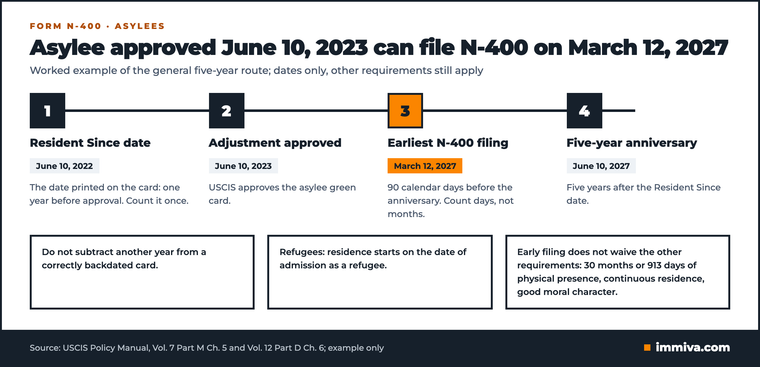
The adjustment approval date determines the one-year rollback. The possible early filing date is 90 calendar days before the five-year anniversary. Count days, not three months. You may file early, but you must complete the required residence period before naturalization. This example assumes you meet the other requirements. USCIS rollback policy, USCIS early-filing policy
You still need lawful permanent residence and must be at least 18 at filing. You must also meet the continuous residence requirement, generally have 30 months or 913 days of physical presence in the relevant five years, meet the applicable state or district residence requirement, and show good moral character. The English, civics, and oath requirements also apply unless you qualify for an exception. Early filing does not waive these requirements. USCIS general eligibility, physical presence policy
The physical presence guide can help you review how to count days alongside the rollback credit.
Review travel and the original asylum record
Check both residence and your immigration history. An absence longer than six months but shorter than one year can trigger a presumption that you broke continuous residence. An absence of one year or more generally breaks residence, subject to applicable exceptions. A reentry permit alone does not preserve residence for citizenship. USCIS continuous residence policy
Organize your trips with the continuous residence guide and residence calculator before filing. Do not assume the calculator independently verifies an asylum rollback or resolves legal questions about your earlier claim.
Returning to the country of feared persecution or using its passport needs a separate review. USCIS examines whether you lawfully obtained permanent residence, including the basis for it. Its policy describes rescission or removal after adjustment when relevant grounds existed before adjustment. A trip alone does not determine the outcome. USCIS lawful admission policy, asylee post-adjustment policy
Get legal advice before filing if your travel or passport use conflicts with your asylum account and those conflicts remain unresolved. Gather the dates, reasons for travel, and supporting records. An emergency may help explain a trip, but it needs to be assessed and does not guarantee that the concern is resolved.
Prepare evidence and reconcile earlier answers
Check the current USCIS N-400 evidence instructions and the N-400 document checklist. Your answers and filing basis determine which evidence you need.
Gather your asylum approval or court order, adjustment approval, prior asylum application if available, travel documents, and trip dates to prepare. Compare the names, family details, addresses, and reported events in those records. These are not all mandatory initial N-400 attachments. Use the current N-400 form instructions and the evidence requirements that apply to your case to decide what to submit. USCIS N-400 evidence instructions, lawful admission review
Answer the arrest and detention questions accurately, including for events abroad. You may need to explain a political arrest and provide applicable records. Do not leave it out because it happened before you arrived in the United States. Follow the current questions and evidence instructions. USCIS N-400 arrest checklist
Immiva’s N-400 preparation uses your answers to build a document list and flag items that need attention. You need individual legal advice to assess unresolved discrepancies in your asylum history or possible grounds for removal.
Frequently Asked Questions
Generally, your five years run from the effective permanent residence date, which already includes the ordinary one-year rollback. The date asylum was granted is separate. USCIS asylee policy
You may qualify for the three-year marriage route with an asylum-based green card, but you must meet all of that route’s requirements. See the citizenship through marriage guide and USCIS spouse eligibility policy.
The I-131 instructions set out different rules for people with asylum who are not permanent residents and those who have adjusted. A refugee travel document may be available after adjustment. Do not assume the requirement before permanent residence applies to every green card holder. USCIS I-131 instructions
Residence requirements still apply after you file, and filing does not resolve concerns about your asylum history. Review the travel while N-400 is pending guide alongside your own trip history. USCIS continuous residence policy
Asylees use the same Application for Naturalization for N-400. Select the eligibility basis that applies to you and answer the current questions. Having received asylum does not replace the residence and other naturalization requirements. USCIS N-400 form page
The time you must wait to meet the residence requirement is separate from the time USCIS takes to process your application after filing. Check the N-400 processing-time guide and USCIS processing-times tool for the applicable office. There is no single guaranteed asylum-to-oath timeline.
Check the recorded date before preparing your application
Count the rollback once when preparing N-400 for asylees. Review your trips and reconcile earlier records before you begin. Immiva’s N-400 preparation can then use your answers to prepare a checked application and document list. USCIS asylee residence policy